

You type in your height and weight, a BMI calculator gives you a number and a category, and then… what? For a lot of people, that number lands with more weight than it deserves — as if it were a verdict on their health, or even their effort.
It isn’t. BMI is a useful starting point, but it’s a blunt one. Here’s how to work out yours, what it can genuinely tell you, and — just as importantly — what it can’t.
At The Weight Loss Specialists, we treat BMI as one signal among many, not the whole story. So calculate your number below, then read on to understand how much to make of it.
First, Work Out Your BMI
Got your number? Good. Now let's put it in context.
What Is BMI, and How Is It Calculated?
BMI stands for Body Mass Index. It's worked out by dividing your weight in kilograms by your height in metres squared — a simple formula that needs nothing more than your height and weight.
For adults, the standard categories are:
- Under 18.5 — underweight
- 18.5 to 24.9 — healthy weight
- 25 to 29.9 — overweight
- 30 and above — obese
BMI became popular for a simple reason: it's quick, cheap, and easy to measure at scale. That's genuinely useful — but it's also the source of its limitations.
What BMI Does Tell You
Across a whole population, BMI is a reasonable screening signal. Higher BMI ranges are associated, on average, with a higher risk of conditions such as type 2 diabetes, high blood pressure, and heart disease.
That makes it a sensible first flag — a quick way to identify who might benefit from a closer look. It's also used as an initial screening measure in specific clinical contexts, including as part of the eligibility criteria for certain treatments and for weight loss surgery.
The key word, though, is screening. BMI is designed to raise a question, not to answer it.
What BMI Doesn't Tell You
This is where the number needs a lot of context.
It doesn't measure body fat
BMI can't tell the difference between fat and muscle. Because muscle is denser than fat, very muscular people — athletes, for instance — can land in the "overweight" or even "obese" range while carrying very little body fat.
It doesn't show where fat sits
Where your body stores fat matters more for your health than the total number on its own. Fat stored around the abdomen (visceral fat) carries more risk than fat stored elsewhere — and BMI can't see the difference at all.
It doesn't account for age, sex, or ethnicity
Body composition varies between people, and a single formula can't reflect that. For some ethnic backgrounds — such as people of South Asian or East Asian descent — health risks can occur at a lower BMI, and some guidelines use adjusted thresholds as a result. Age and sex change the picture too.
It doesn't measure your actual health
Your fitness, your blood sugar, your cholesterol, your blood pressure, your diet, your sleep — none of these show up in a BMI reading. Two people with an identical BMI can have completely different health profiles.
It doesn't measure you
A BMI category is not a measure of your worth, your willpower, or how hard you've worked. It's a rough calculation based on two numbers — nothing more.
Why Clinicians Look Beyond BMI
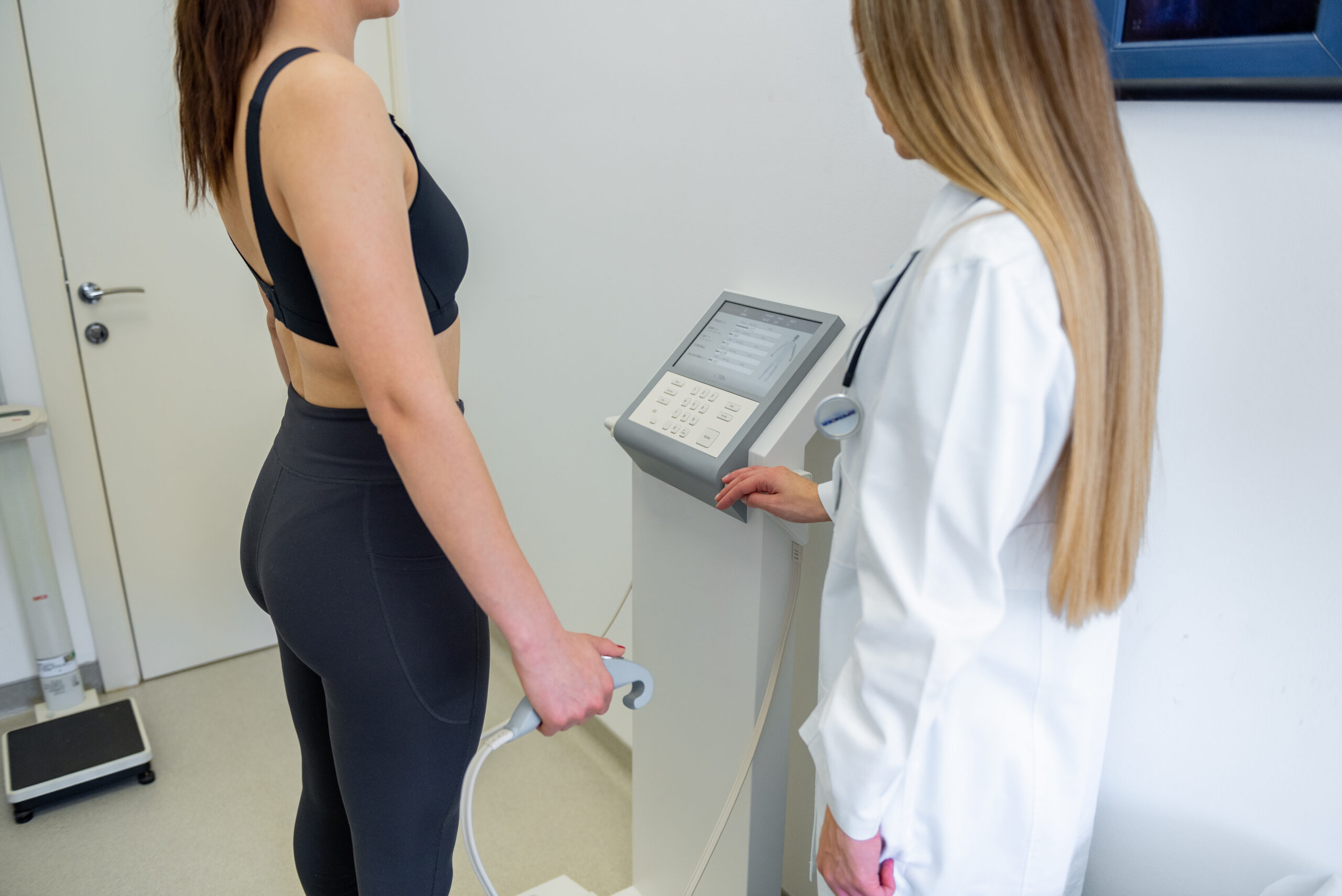
A proper assessment uses BMI as one input alongside several others: waist measurement, body composition analysis (which looks at muscle and fat rather than just total weight), blood tests, your health history, and how you actually feel day to day.
This is exactly why the same BMI can mean very different things for different people — and why a number from an online calculator is a starting point for a conversation, not a conclusion.
When BMI Matters More
There are specific situations where the number carries real practical weight. Certain BMI thresholds are used as part of the eligibility criteria for some medical treatments and for bariatric surgery — typically a BMI of 40 or above, or 35 or above alongside a related health condition such as type 2 diabetes.
In those contexts, BMI acts as a gate that helps determine whether a particular pathway is appropriate. Even then, it's one part of a much broader clinical assessment — not the whole decision.
A Note on BMI and How You Feel About It
If seeing your BMI category left you feeling deflated, that's a very human response — and worth naming.
The number is a limited tool, not a judgment, and it says nothing about the effort you've put in or the person you are. If your relationship with your weight, your body, or food feels difficult, that's something worth raising with a health professional — gently, and without any pressure to reach a particular number.
How The Weight Loss Specialists Uses BMI
We think of BMI as a starting point, not a destination. A proper assessment looks at the fuller picture — body composition, health markers, and your individual history — so that any plan is built around your actual health rather than a single figure.
If you'd like to understand what your number really means for you, our medically guided weight management team can help. You can book a suitability assessment to talk it through, without pressure or judgement.
Frequently Asked Questions
Is BMI accurate?
BMI is a useful screening tool, but it's not a precise measure of body fat or overall health. It works reasonably well across large groups of people, but for any individual it needs to be read alongside other information.
What is a healthy BMI?
For most adults, a BMI between 18.5 and 24.9 is considered the healthy range. That said, the right interpretation depends on the individual — including their muscle mass, age, and ethnic background.
Can I have a high BMI and still be healthy?
Potentially, yes. Muscle mass, fitness, and metabolic markers such as blood sugar and cholesterol all matter, and BMI alone can't capture them — which is why a fuller assessment is more informative.
Does BMI work for everyone?
Not equally well. It's less reliable for athletes, older adults, pregnant people, and some ethnic groups, so it should always be interpreted in context rather than taken at face value.
What should I do if my BMI is outside the healthy range?
Treat it as a prompt to look closer, ideally with a clinician who can assess the fuller picture — not as a reason to panic or to start an extreme diet. A measured, individualised approach is far more useful than reacting to a single number.
Final Thoughts
BMI is a helpful starting point and a poor finishing point. It's worth knowing your number — but it's far more worth understanding what sits behind it.
At The Weight Loss Specialists, we help you look past the figure to the fuller picture of your health, so any decision you make is an informed one. Book a suitability assessment to take the next step.